|
MOAB: Mesh Oriented datABase
(version 5.4.1)
|
|
MOAB: Mesh Oriented datABase
(version 5.4.1)
|
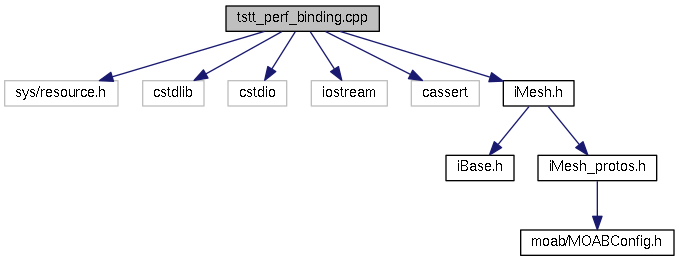
#include <sys/resource.h>#include <cstdlib>#include <cstdio>#include <iostream>#include <cassert>#include "iMesh.h" Include dependency graph for tstt_perf_binding.cpp:
Go to the source code of this file.
Defines | |
| #define | VINDEX(i, j, k) ( ( i ) + ( (j)*numv ) + ( (k)*numv_sq ) ) |
| #define | VINDEX(i, j, k) ( ( i ) + ( (j)*numv ) + ( (k)*numv_sq ) ) |
Functions | |
| void | query_elem_to_vert (iMesh_Instance mesh) |
| void | query_vert_to_elem (iMesh_Instance mesh) |
| void | print_time (const bool print_em, double &tot_time, double &utime, double &stime, long &imem, long &rmem) |
| void | build_connect (const int nelem, const int vstart, int *&connect) |
| void | testB (iMesh_Instance mesh, const int nelem, const double *coords, int *connect) |
| void | testC (iMesh_Instance mesh, const int nelem, const double *coords) |
| void | compute_edge (double *start, const int nelem, const double xint, const int stride) |
| void | compute_face (double *a, const int nelem, const double xint, const int stride1, const int stride2) |
| void | build_coords (const int nelem, double *&coords) |
| int | main (int argc, char *argv[]) |
Variables | |
| double | LENGTH = 1.0 |
| #define VINDEX | ( | i, | |
| j, | |||
| k | |||
| ) | ( ( i ) + ( (j)*numv ) + ( (k)*numv_sq ) ) |
| #define VINDEX | ( | i, | |
| j, | |||
| k | |||
| ) | ( ( i ) + ( (j)*numv ) + ( (k)*numv_sq ) ) |
| void build_connect | ( | const int | nelem, |
| const int | vstart, | ||
| int *& | connect | ||
| ) |
| void build_coords | ( | const int | nelem, |
| double *& | coords | ||
| ) |
| void compute_edge | ( | double * | start, |
| const int | nelem, | ||
| const double | xint, | ||
| const int | stride | ||
| ) |
| void compute_face | ( | double * | a, |
| const int | nelem, | ||
| const double | xint, | ||
| const int | stride1, | ||
| const int | stride2 | ||
| ) |
| int main | ( | int | argc, |
| char * | argv[] | ||
| ) |
Definition at line 45 of file tstt_perf_binding.cpp.
References build_connect(), build_coords(), iBase_SUCCESS, iMesh_dtor, iMesh_newMesh, iMesh_setGeometricDimension, mesh, testB(), and testC().
{
    int nelem = 20;
    if( argc < 3 )
    {
        std::cout << "Usage: " << argv[0] << " <ints_per_side> <A|B|C>" << std::endl;
        return 1;
    }

    char which_test = '\0';

    sscanf( argv[1], "%d", &nelem );
    sscanf( argv[2], "%c", &which_test );

    if( which_test != 'B' && which_test != 'C' )
    {
        std::cout << "Must indicate B or C for test." << std::endl;
        return 1;
    }

    std::cout << "number of elements: " << nelem << "; test " << which_test << std::endl;

    // initialize the data in native format

    // pre-build the coords array
    double* coords;
    build_coords( nelem, coords );
    assert( NULL != coords );

    // test B: create mesh using bulk interface

    // create an implementation
    iMesh_Instance mesh;
    int result;
    iMesh_newMesh( NULL, &mesh, &result, 0 );
    int* connect = NULL;

    if( iBase_SUCCESS != result )
    {
        cerr << "Couldn't create mesh instance." << endl;
        iMesh_dtor( mesh, &result );
        return 1;
    }

    iMesh_setGeometricDimension( mesh, 3, &result );
    if( iBase_SUCCESS != result )
    {
        cerr << "Couldn't set geometric dimension." << endl;
        iMesh_dtor( mesh, &result );
        return 1;
    }

    switch( which_test )
    {
        case 'B':
            build_connect( nelem, 1, connect );

            // test B: create mesh using bulk interface
            testB( mesh, nelem, coords, connect );
            break;

        case 'C':
            // test C: create mesh using individual interface
            testC( mesh, nelem, coords );
            break;
    }

    free( coords );

    return 0;
}
| void print_time | ( | const bool | print_em, |
| double & | tot_time, | ||
| double & | utime, | ||
| double & | stime, | ||
| long & | imem, | ||
| long & | rmem | ||
| ) |
| void query_elem_to_vert | ( | iMesh_Instance | mesh | ) |
Definition at line 281 of file tstt_perf_binding.cpp.
References iBase_BLOCKED, iBase_REGION, iBase_SUCCESS, iBase_VERTEX, iMesh_getDfltStorage, iMesh_getEntAdj, iMesh_getEntities, iMesh_getRootSet, iMesh_getVtxArrCoords, iMesh_HEXAHEDRON, and root_set.
{
    iBase_EntityHandle* all_hexes = NULL;
    int all_hexes_size, all_hexes_allocated = 0;

    // get all the hex elements
    int success;
    iBase_EntitySetHandle root_set;
    iMesh_getRootSet( mesh, &root_set, &success );
    if( iBase_SUCCESS != success )
    {
        cerr << "Couldn't get root set." << endl;
        return;
    }

    iMesh_getEntities( mesh, root_set, iBase_REGION, iMesh_HEXAHEDRON, &all_hexes, &all_hexes_allocated,
                       &all_hexes_size, &success );
    if( iBase_SUCCESS != success )
    {
        cerr << "Couldn't get all hex elements in query_mesh" << endl;
        return;
    }

    // now loop over elements
    iBase_EntityHandle* dum_connect = NULL;
    int dum_connect_allocated       = 0, dum_connect_size;
    double* dum_coords              = NULL;
    int dum_coords_size, dum_coords_allocated = 0;
    int order;
    iMesh_getDfltStorage( mesh, &order, &success );
    if( iBase_SUCCESS != success ) return;

    for( int i = 0; i < all_hexes_size; i++ )
    {
        // get the connectivity of this element; will allocate space on 1st iteration,
        // but will have correct size on subsequent ones
        iMesh_getEntAdj( mesh, all_hexes[i], iBase_VERTEX, &dum_connect, &dum_connect_allocated, &dum_connect_size,
                         &success );

        if( iBase_SUCCESS == success )
        {
            // get vertex coordinates; ; will allocate space on 1st iteration,
            // but will have correct size on subsequent ones
            iMesh_getVtxArrCoords( mesh, dum_connect, dum_connect_size, order, &dum_coords, &dum_coords_allocated,
                                   &dum_coords_size, &success );

            double centroid[3] = { 0.0, 0.0, 0.0 };
            if( order == iBase_BLOCKED )
            {
                for( int j = 0; j < 8; j++ )
                {
                    centroid[0] += dum_coords[j];
                    centroid[1] += dum_coords[8 + j];
                    centroid[2] += dum_coords[16 + j];
                }
            }
            else
            {
                for( int j = 0; j < 8; j++ )
                {
                    centroid[0] += dum_coords[3 * j];
                    centroid[1] += dum_coords[3 * j + 1];
                    centroid[2] += dum_coords[3 * j + 2];
                }
            }
        }

        if( iBase_SUCCESS != success )
        {
            cerr << "Problem getting connectivity or vertex coords." << endl;
            return;
        }
    }

    free( all_hexes );
    free( dum_connect );
    free( dum_coords );
}
| void query_vert_to_elem | ( | iMesh_Instance | mesh | ) |
Definition at line 360 of file tstt_perf_binding.cpp.
References iBase_REGION, iBase_SUCCESS, iBase_VERTEX, iMesh_getEntAdj, iMesh_getEntities, iMesh_getRootSet, iMesh_POINT, and root_set.
{
    iBase_EntityHandle* all_verts = NULL;
    int all_verts_allocated       = 0, all_verts_size;

    iBase_EntitySetHandle root_set;
    int success;
    iMesh_getRootSet( mesh, &root_set, &success );
    if( iBase_SUCCESS != success )
    {
        cerr << "Couldn't get root set." << endl;
        return;
    }

    // get all the vertices elements
    iMesh_getEntities( mesh, root_set, iBase_VERTEX, iMesh_POINT, &all_verts, &all_verts_allocated, &all_verts_size,
                       &success );
    if( iBase_SUCCESS != success )
    {
        cerr << "Couldn't get all vertices in query_vert_to_elem" << endl;
        return;
    }

    // for this mesh, should never be more than 8 hexes connected to a vertex
    iBase_EntityHandle* dum_hexes = (iBase_EntityHandle*)calloc( 8, sizeof( iBase_EntityHandle ) );

    int dum_hexes_allocated = 8, dum_hexes_size;

    // now loop over vertices
    for( int i = 0; i < all_verts_size; i++ )
    {

        // get the connectivity of this element; will have to allocate space on every
        // iteration, since size can vary
        iMesh_getEntAdj( mesh, all_verts[i], iBase_REGION, &dum_hexes, &dum_hexes_allocated, &dum_hexes_size,
                         &success );
        if( iBase_SUCCESS != success )
        {
            cerr << "Problem getting connectivity or vertex coords." << endl;
            // do not return early, as we would leak memory
        }
    }

    free( dum_hexes );
    free( all_verts );
}
| void testB | ( | iMesh_Instance | mesh, |
| const int | nelem, | ||
| const double * | coords, | ||
| int * | connect | ||
| ) |
Definition at line 117 of file tstt_perf_binding.cpp.
References iBase_BLOCKED, iBase_SUCCESS, iMesh_createEntArr, iMesh_createVtxArr, iMesh_dtor, iMesh_HEXAHEDRON, print_time(), query_elem_to_vert(), and query_vert_to_elem().
{
    double utime, stime, ttime0, ttime1, ttime2, ttime3, ttime4;
    long imem0, rmem0, imem1, rmem1, imem2, rmem2, imem3, rmem3, imem4, rmem4;

    print_time( false, ttime0, utime, stime, imem0, rmem0 );
    int num_verts = ( nelem + 1 ) * ( nelem + 1 ) * ( nelem + 1 );
    int num_elems = nelem * nelem * nelem;

    // create vertices as a block; initialize to NULL so allocation is done in interface
    iBase_EntityHandle* vertices = NULL;
    int vertices_allocated       = 0, vertices_size;
    int result;
    iMesh_createVtxArr( mesh, num_verts, iBase_BLOCKED, coords, 3 * num_verts, &vertices, &vertices_allocated,
                        &vertices_size, &result );
    if( iBase_SUCCESS != result )
    {
        cerr << "Couldn't create vertices in bulk call" << endl;
        free( vertices );
        return;
    }

    // need to explicitly fill connectivity array, since we don't know
    // the format of entity handles
    int nconnect                     = 8 * num_elems;
    iBase_EntityHandle* sidl_connect = (iBase_EntityHandle*)malloc( nconnect * sizeof( iBase_EntityHandle ) );

    for( int i = 0; i < nconnect; i++ )
    {
        // use connect[i]-1 because we used starting vertex index (vstart) of 1
        assert( connect[i] - 1 < num_verts );
        sidl_connect[i] = vertices[connect[i] - 1];
    }

    // no longer need vertices and connect arrays, free here to reduce overall peak memory usage
    free( vertices );
    free( connect );

    // create the entities
    iBase_EntityHandle* new_hexes = NULL;
    int new_hexes_allocated       = 0, new_hexes_size;
    int* status                   = NULL;
    int status_allocated          = 0, status_size;

    iMesh_createEntArr( mesh, iMesh_HEXAHEDRON, sidl_connect, nconnect, &new_hexes, &new_hexes_allocated,
                        &new_hexes_size, &status, &status_allocated, &status_size, &result );
    if( iBase_SUCCESS != result )
    {
        cerr << "Couldn't create hex elements in bulk call" << endl;
        free( new_hexes );
        free( status );
        free( sidl_connect );
        return;
    }

    print_time( false, ttime1, utime, stime, imem1, rmem1 );

    free( status );
    free( new_hexes );
    free( sidl_connect );

    // query the mesh 2 ways
    query_elem_to_vert( mesh );

    print_time( false, ttime2, utime, stime, imem2, rmem2 );

    query_vert_to_elem( mesh );

    print_time( false, ttime3, utime, stime, imem3, rmem3 );

    iMesh_dtor( mesh, &result );

    print_time( false, ttime4, utime, stime, imem4, rmem4 );

    std::cout << "TSTTb/MOAB_ucd_blocked: nelem, construct, e_to_v, v_to_e, after_dtor = " << nelem << ", "
              << ttime1 - ttime0 << ", " << ttime2 - ttime1 << ", " << ttime3 - ttime2 << ", " << ttime4 - ttime3
              << " seconds" << std::endl;
    std::cout << "TSTTb/MOAB_ucd_blocked_memory_(rss): initial, after_construction, e-v, v-e, after_dtor:" << rmem0
              << ", " << rmem1 << ", " << rmem2 << ", " << rmem3 << ", " << rmem4 << " kb" << std::endl;
}
| void testC | ( | iMesh_Instance | mesh, |
| const int | nelem, | ||
| const double * | coords | ||
| ) |
Definition at line 198 of file tstt_perf_binding.cpp.
References iBase_SUCCESS, iMesh_createEnt, iMesh_createVtx, iMesh_dtor, iMesh_HEXAHEDRON, print_time(), query_elem_to_vert(), query_vert_to_elem(), and VINDEX.
{
    double utime, stime, ttime0, ttime1, ttime2, ttime3, ttime4;
    long imem0, rmem0, imem1, rmem1, imem2, rmem2, imem3, rmem3, imem4, rmem4;
    print_time( false, ttime0, utime, stime, imem0, rmem0 );

    // need some dimensions
    int numv      = nelem + 1;
    int numv_sq   = numv * numv;
    int num_verts = numv * numv * numv;
#define VINDEX( i, j, k ) ( ( i ) + ( (j)*numv ) + ( (k)*numv_sq ) )

    // array to hold vertices created individually
    iBase_EntityHandle* sidl_vertices = (iBase_EntityHandle*)malloc( num_verts * sizeof( iBase_EntityHandle ) );
    int result;

    for( int i = 0; i < num_verts; i++ )
    {
        // create the vertex
        iMesh_createVtx( mesh, coords[i], coords[i + num_verts], coords[i + 2 * num_verts], sidl_vertices + i,
                         &result );
        if( iBase_SUCCESS != result )
        {
            cerr << "Couldn't create vertex in individual call" << endl;
            return;
        }
    }

    iBase_EntityHandle tmp_conn[8], new_hex;

    for( int i = 0; i < nelem; i++ )
    {
        for( int j = 0; j < nelem; j++ )
        {
            for( int k = 0; k < nelem; k++ )
            {
                int vijk    = VINDEX( i, j, k );
                tmp_conn[0] = sidl_vertices[vijk];
                tmp_conn[1] = sidl_vertices[vijk + 1];
                tmp_conn[2] = sidl_vertices[vijk + 1 + numv];
                tmp_conn[3] = sidl_vertices[vijk + numv];
                tmp_conn[4] = sidl_vertices[vijk + numv * numv];
                tmp_conn[5] = sidl_vertices[vijk + 1 + numv * numv];
                tmp_conn[6] = sidl_vertices[vijk + 1 + numv + numv * numv];
                tmp_conn[7] = sidl_vertices[vijk + numv + numv * numv];

                // create the entity

                int status;
                iMesh_createEnt( mesh, iMesh_HEXAHEDRON, tmp_conn, 8, &new_hex, &status, &result );
                if( iBase_SUCCESS != result )
                {
                    cerr << "Couldn't create hex element in individual call" << endl;
                    // return;  do not return if errors, as we would leak memory
                }
            }
        }
    }

    print_time( false, ttime1, utime, stime, imem1, rmem1 );

    free( sidl_vertices );

    // query the mesh 2 ways
    query_elem_to_vert( mesh );

    print_time( false, ttime2, utime, stime, imem2, rmem2 );

    query_vert_to_elem( mesh );

    print_time( false, ttime3, utime, stime, imem3, rmem3 );

    iMesh_dtor( mesh, &result );

    print_time( false, ttime4, utime, stime, imem4, rmem4 );

    std::cout << "TSTTb/MOAB_ucd_indiv: nelem, construct, e_to_v, v_to_e, after_dtor = " << nelem << ", "
              << ttime1 - ttime0 << ", " << ttime2 - ttime1 << ", " << ttime3 - ttime2 << ", " << ttime4 - ttime3
              << " seconds" << std::endl;
    std::cout << "TSTTb/MOAB_ucd_indiv_memory_(rss): initial, after_construction, e-v, v-e, after_dtor:" << rmem0
              << ", " << rmem1 << ", " << rmem2 << ", " << rmem3 << ", " << rmem4 << " kb" << std::endl;
}
| double LENGTH = 1.0 |
Definition at line 31 of file tstt_perf_binding.cpp.
 1.7.6.1